
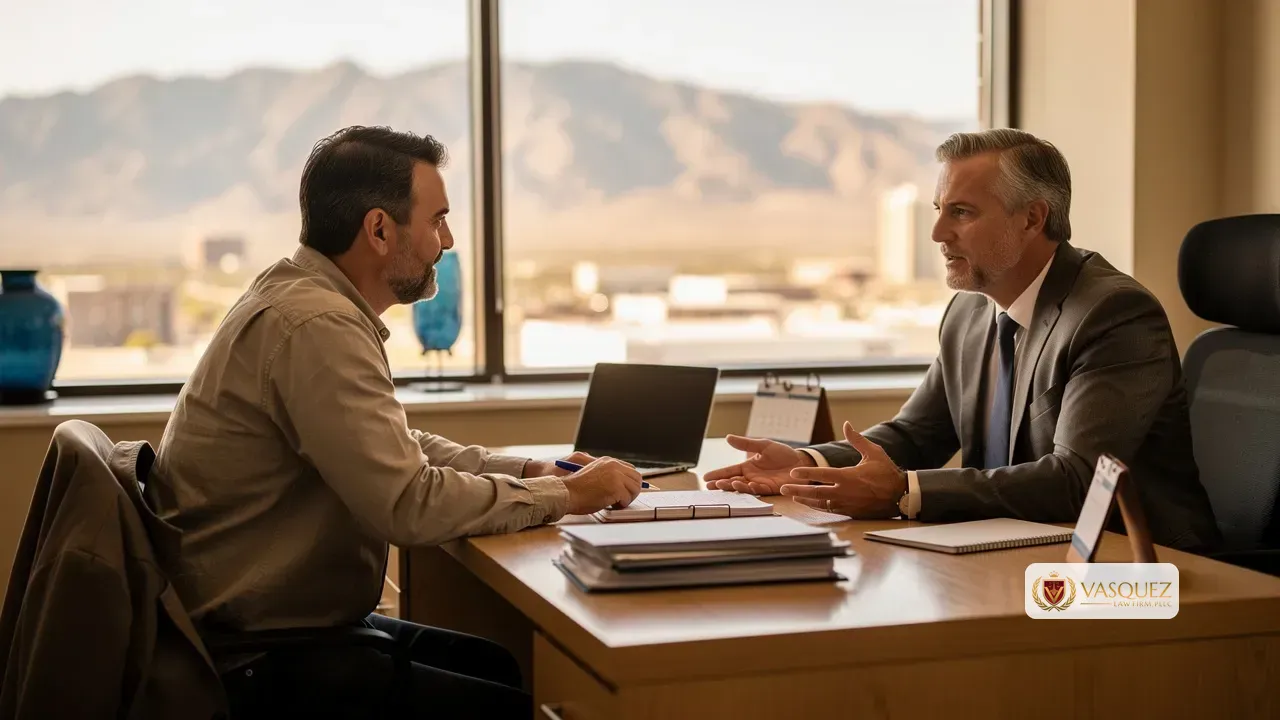
Start by confirming fit before contacting a lawyer
Choosing a personal injury lawyer in Las Vegas begins with a fit question, not a promise about the result. An injury does not automatically mean that you have a personal injury claim. The right next step depends on what happened, who was involved, the medical care you received, and the help you need. That means the first useful conversation should connect your facts to Nevada law and to the kind of assistance your situation requires.
A Nevada consultation should answer four basic questions: Does the lawyer handle the type of incident you experienced? Can the lawyer address the location and legal rules that apply to your matter? Can the lawyer explain how the claim process would work? Can the lawyer tell you what information is still needed before any claim decision is made? We recommend seeking legal advice tailored to your location and facts. General information can help you prepare, but it cannot decide whether your facts support a claim.
Use this opening screen before you compare firms:
- Location: Ask whether the lawyer can advise on a Nevada matter, not merely whether the website mentions Las Vegas.
- Incident: State whether you are dealing with a car accident, truck crash, slip and fall, wrongful-death-related matter, or workplace injury.
- Need: Explain whether you need help understanding the claim, organizing records, communicating with an insurer, or evaluating a settlement request.
- Timing: Give the date of the event, the date of any death if the matter involves wrongful death, and the dates of medical care or insurance contact.
These points do not establish eligibility. They give you a disciplined way to decide whether a conversation with a particular lawyer is appropriate.
The screen also keeps two questions separate. First, does your situation fall within the type of work the lawyer handles? Second, can that lawyer advise on the Nevada location and facts? A firm may describe personal injury work broadly while still needing to determine whether it can address your particular jurisdiction, incident, parties, and records. Treat a clear boundary as useful information, not as an answer about the merits of your claim.
Identify the incident and the type of help you need
Different needs call for different questions during the first conversation:
- Car accident: Ask whether the lawyer can evaluate the collision facts, available evidence, medical records, and insurance communications.
- Truck crash: Ask whether the lawyer handles truck-accident matters and can explain which parties or records may need attention.
- Slip and fall: Ask how the lawyer would evaluate the location, the circumstances of the fall, the parties involved, and the medical documentation.
- Wrongful death: Ask who may be able to pursue the matter and which date controls the timing analysis.
- Workplace injury: Ask whether the lawyer can explain how workers' compensation issues relate to the facts you describe.
The purpose of these questions is not to force your situation into a category. It is to see whether the lawyer's work matches the incident and the assistance you are seeking.
Describe the incident in a way that lets the lawyer sort the relevant issues without guessing. Start with the setting and sequence, then identify the people or organizations connected to the event, the care you received, and the help you want. For example, you might need help understanding an insurance request, preserving information about a fall, organizing records after a truck crash, or separating a workplace-injury question from another possible claim. The facts and the requested help should guide the next conversation.

Apply the Nevada-local counsel screen
Nevada jurisdiction should be the first practical filter when you choose counsel for a Las Vegas injury matter. We recommend seeking legal advice tailored to your location and facts, and we recommend consulting a local attorney to understand rights and processes specific to your state and injury circumstances. A lawyer's general personal-injury experience does not answer whether that lawyer can advise on your Nevada matter.
Vasquez Law Firm should not be treated as a Las Vegas office or as a Nevada practice based on this guide. Our personal injury experience includes the types of work described below, but the decision to rely on any firm for a Nevada matter should follow a direct question about location, authority, and incident fit. Ask that question before sharing sensitive details or treating general information as advice for your claim.
A Nevada-local counsel screen can be short and direct:
- Can you advise on a claim arising from an event in Nevada?
- Does your work include my incident type?
- Will you assess the parties, medical care, and available records before discussing a claim path?
- What facts would you need to evaluate location-specific rights and procedures?
- If you cannot handle the Nevada matter, can you explain that boundary clearly?
The answer should be specific to your location and facts. Do not treat a broad practice description as a substitute for that answer.
A useful answer identifies the location the lawyer can advise on, the incident types within the lawyer's work, and the facts needed for an assessment. A vague answer leaves the central jurisdiction question unresolved. If the lawyer cannot address Nevada-specific rights and procedures, keep looking for advice tailored to the state and circumstances of your matter.
Vasquez Law Firm has offices in North Carolina and Florida. It does not verify a Las Vegas office, Nevada practice, or Nevada availability. Keep that boundary in view when evaluating the firm for a Las Vegas matter.
Compare lawyers by incident fit and claim-process support
Comparing personal injury lawyers requires more than counting practice areas. Use two shared criteria: incident fit and claim-process support. Incident fit asks whether the lawyer handles the event you described and understands the parties involved. Claim-process support asks what the lawyer can do with evidence, records, insurance communications, and the practical effects of the injury.
Our personal injury work includes the following support:
- We can investigate a car-accident scene and gather evidence.
- We can handle communications with insurance companies and negotiate for a fair settlement.
- We often work with providers and employers to gather records and explain how injuries affect your life.
- We specialize in personal injury law, including truck accidents.
Those statements describe our work in the areas identified. They do not establish that we can advise on a Nevada claim, so the Nevada-local counsel screen still applies.
Use the same questions for every lawyer you evaluate:
- Incident fit: Have you handled matters involving this type of event and these parties?
- Evidence: How would you approach the records, photographs, reports, communications, or other information available in my matter?
- Insurance contact: What support would you provide if an insurer requests information or sends an offer?
- Medical records: How would you work with providers to understand the treatment connected to the injury?
- Work impact: How would you address missed work, lost pay, or the way the injury affects daily activities?
- Communication: Who would explain the next steps, and what facts would change the assessment?
A useful comparison does not require identical answers from every firm. It requires answers that address your actual incident and explain the limits of what can be decided at the first conversation.
Choose based on the match between your situation and the lawyer's stated work, not on a general label such as personal injury. If a lawyer handles car accidents but cannot explain how the firm approaches your location, parties, and records, the comparison is incomplete. If a lawyer handles your incident and explains what information is needed next, you have a clearer basis for deciding whether to continue the conversation.
Make a short comparison note for each lawyer using the same headings: Nevada fit, incident fit, evidence support, insurance communication, medical-record coordination, work-impact questions, and next step. Write the lawyer's answer beside each heading rather than relying on a general impression. This keeps the decision tied to your situation and makes it easier to identify an unanswered question.
A lawyer's ability to describe a process is not a prediction about your result. It tells you how the lawyer may approach the information and communications involved. Seek advice tailored to your location and facts before deciding what the process means for your claim.

Check deadlines, fault questions, and other issues that change the path
Nevada timing rules make early case-specific review important. Nevada has a two-year statute of limitations for filing personal injury claims. Wrongful-death deadlines generally run from the death, not always from the earlier injury event. Those are general timing statements, not a calculation of your deadline, and the date that matters in your situation requires a lawyer to examine the facts.
A Nevada wrongful-death matter also has a different question about who may bring the claim. Certain family members or the estate may have a wrongful-death claim after a death caused by another person's careless or wrongful act. If your situation involves a death, preserve the date of death, information about the estate or family relationship, and the facts surrounding the event for a location-specific review.
Nevada uses a modified comparative-fault rule, so compensation can be reduced based on a person's degree of responsibility. That rule does not tell you how responsibility will be assessed in your matter. Fault may depend on the event, the parties, the available evidence, and the medical consequences, so describe uncertainty rather than deciding the legal issue yourself.
Before a consultation, write down:
- The date and location of the event.
- The date of the first medical care and later treatment.
- The identity of drivers, employers, property owners, insurers, or other involved parties.
- Any date on which you received an insurance request, offer, denial, or other communication.
- Whether the matter involves a death and, if so, the date of death.
- Any statement you made about responsibility and the circumstances in which you made it.
These dates and details help a lawyer identify which questions need immediate attention. They do not establish the deadline or the value of a claim.
Do not combine every timing issue into one countdown. A personal-injury matter and a wrongful-death matter can involve different triggering facts, and the date of the injury may not answer the question in a death-related matter. Give the lawyer each relevant date separately, including later medical care and insurance communications, so the timing analysis starts with a complete account.
Handle early insurance contact carefully
Insurance contact can arrive before you understand the full effect of an injury. One Las Vegas injury-law source warns that insurers may approach you quickly after an accident and ask you to sign away your right to fair compensation. Treat a request for a statement, release, or signature as something to understand before you agree to it.
When an insurer contacts you, keep the discussion factual and organized:
- Record the insurer's name, the representative's name, the claim number, and the date of contact.
- Ask what document or information the insurer wants and why it is requesting it.
- Keep copies of letters, emails, forms, photographs, and messages.
- Do not guess about medical recovery, future treatment, lost work, or legal responsibility.
- Explain the request to a lawyer before signing a release or accepting an offer when you need help understanding its effect.
These steps help you preserve the information surrounding the communication. They do not replace legal advice about whether a particular response is appropriate.
Settlement timing also deserves a direct question. We advise truck-accident victims not to accept low settlement offers too quickly because initial offers often undervalue injuries and damages. That advice does not determine whether an offer is low in your situation; ask a lawyer to assess the offer against the facts, medical care, records, and losses you can document.
Do not turn an early phone call into a final decision about your claim. First identify what the insurer is asking, preserve the communication, and obtain advice tailored to the Nevada facts before making a decision that could affect your rights.
Keep the request and your response together with the rest of your timeline. Note whether the communication concerned a statement, medical authorization, release, payment, or settlement. You can then show a lawyer exactly what was requested instead of trying to reconstruct the conversation later.

Prepare the records and timeline available for consultation
Preparing for a personal injury consultation means gathering what you already have, not building a perfect case file. The event, involved parties, medical care, and help you need all affect the next step. A clear timeline lets you explain those points without relying on memory alone.
Create a folder or digital file with the records available to you:
- Event records: photographs, videos, incident reports, police information, workplace reports, or property details.
- People and parties: names and contact information for drivers, employers, property owners, witnesses, insurers, and medical providers.
- Medical care: bills, discharge papers, appointment information, prescriptions, treatment notes, and descriptions of symptoms as you experienced them.
- Communications: insurance letters, emails, text messages, recorded requests, claim numbers, and any release or settlement document.
- Work records: dates you missed work, employer communications, pay information, and records showing the effect of the injury on your work.
- Timeline: the event date, symptoms, medical visits, work changes, insurance contact, and any later development you remember.
You do not need every item before asking for help. Bring what is available and identify what is missing.
Lost-pay documentation can help explain the work effect of an injury. Useful records may include pay stubs, W-2 information, bonus reports, and other records showing your pay before the injury. Keep the records you have rather than waiting to assemble a complete employment file, and tell the lawyer which work information remains unavailable.
Use the timeline to separate what you know from what you assume. Write, “I saw,” “I received,” or “I was told” when those descriptions are accurate, and mark dates you cannot remember precisely. This approach gives the lawyer a clearer starting point without asking you to decide fault, claim validity, or the amount of compensation.
Put the most time-sensitive information near the beginning of the file: the event date, the date of death if applicable, medical-care dates, insurance contact, and any stated response date. Follow those entries with names, records, and work information. This order makes it easier to explain what happened and which question needs attention first.
A missing document should become a note, not a reason to delay the conversation. Write down what the document was, who may have it, and whether you requested it. A lawyer can then tell you which missing information matters to the next assessment.
Describe what happened without declaring legal fault
Explaining what happened from your point of view is different from declaring that you were legally at fault. When speaking with a personal injury lawyer, explain the sequence of events, what you observed, what others did, what happened afterward, and what you do not know. Fault often depends on evidence you may not yet have.
A useful account might say, “I was traveling through the intersection, I saw the other vehicle after the impact, and I went to urgent care that evening.” It can also say, “I am not sure how fast either vehicle was traveling,” or “I do not know which party controlled that area.” Those statements preserve your account without turning an uncertain detail into a legal conclusion.
Separate these four parts of your description:
- Observation: What you saw, heard, felt, or did.
- Information from others: What a witness, employer, provider, insurer, or another party told you.
- Effect: The symptoms, treatment, missed work, or daily limitations that followed.
- Uncertainty: The details you cannot confirm or remember.
Give the lawyer the facts in that order when possible. Let the lawyer evaluate the legal significance after considering the available evidence.
If you previously told someone, “It was my fault,” do not assume that sentence resolves the legal issue. Explain the circumstances in which you said it, what you meant, and what you actually observed. Fault is a legal issue that may depend on evidence you do not yet have, so provide the complete context to the lawyer.
Use the consultation to test communication and next steps
Ask questions that require a specific answer about your situation:
- Jurisdiction: Can you advise on an injury matter arising in Nevada, and what location facts do you need to assess?
- Incident fit: Does your work include my type of collision, fall, workplace injury, or wrongful-death-related matter?
- Evidence: What records, photographs, reports, or witness information would help you evaluate the event?
- Medical care: What treatment information would help connect the injury to the event and explain its effect?
- Insurance: How would communications, requests, releases, or settlement offers be handled or evaluated?
- Work impact: What employment and pay records would help explain missed work or reduced earnings?
- Next step: What should I do next, and what decision should wait until more facts are available?
The goal is not to obtain a prediction before the facts are reviewed. The goal is to understand the process, the limits of the current information, and the action that fits the next stage.
After the conversation, write down the lawyer's answers while they are clear. Note whether the lawyer addressed Nevada, your incident type, the known parties, your medical care, insurance contact, and the records you can provide. If the answers remain general, ask which fact would change the assessment and what information would resolve that question.
A useful consultation should leave you with a defined next question, even when the lawyer cannot yet decide the claim. You should know whether the location is within the lawyer's work, which facts need further review, what records may help, and whether a local Nevada attorney is needed. If those points remain unclear, the conversation has not yet answered the fit question.
Know what general information cannot decide for you
General information cannot determine whether you have a valid personal injury claim. An injury does not automatically mean that you have a personal injury claim, and the appropriate next step depends on the event, parties, medical care, and help you need. We recommend seeking legal advice tailored to your location and facts before relying on general information for a claim decision.
A general guide cannot determine the value of your claim, whether a settlement offer should be accepted, whether another party is legally responsible, or which lawyer is right for your matter. Those decisions depend on facts that may include the event, the parties, medical care, work effects, available evidence, and the applicable Nevada process. Use this guide to organize questions, then ask a lawyer to assess your specific circumstances.
We recommend consulting a local attorney to understand your rights and the processes specific to your state and injury circumstances. That recommendation applies especially when your location, incident type, timing, or family circumstances could change the path.
The practical use of this guide is limited but clear: identify the incident, organize the available information, ask about Nevada fit, and record the questions that require legal analysis. Do not use a general description of a rule to decide that you have a claim, that a deadline has passed, or that an offer should be accepted.
Verify Nevada fit before taking the next step
Choosing counsel for a Las Vegas injury matter should leave you with three clear answers: whether the lawyer can address Nevada-specific questions, whether the lawyer handles your incident type, and what information is needed to assess the next step. Organize your event timeline, medical information, insurance communications, and available work records before the conversation. General information cannot replace advice tailored to your location and facts.
Our personal injury work includes truck accidents, and we can investigate car-accident scenes, gather evidence, handle insurance communications, and negotiate for a fair settlement. Those services do not by themselves establish Nevada representation. The location and incident facts must remain part of the fit assessment.
A lawyer must decide your individual suitability, claim path, timing, and available options after reviewing your facts. Keep the relevant dates, records, and uncertainties organized so that assessment can address the circumstances that matter. Nevada practice and availability should be established before you rely on any firm for a Nevada matter.
What should you ask before contacting a personal injury lawyer?
Does Vasquez Law Firm serve personal injury clients in Las Vegas?
The supplied business information identifies offices in North Carolina and Florida but does not verify a Las Vegas office, Nevada licensure, or Nevada availability. Before relying on the firm for a Las Vegas matter, ask directly whether it can advise on your Nevada location and facts. If not, seek a lawyer who can provide Nevada-specific guidance.
What documents should I bring to a personal injury consultation?
Bring what you already have, such as accident or incident reports, photographs, medical records and bills, insurance letters, claim information, witness details, work records, and a timeline of important dates. Pay stubs, W-2 information, bonus reports, or other pre-injury pay records may help explain lost pay. Missing documents should be identified rather than delaying the consultation.
What should I do if an insurer asks me to sign a release or accept an offer?
Record what the insurer requested, keep copies of the communications, and avoid signing or accepting anything you do not understand. Do not guess about your recovery, future treatment, lost work, or legal responsibility. Ask a lawyer to evaluate the request or offer in light of your specific facts, medical care, records, and losses.
What should I say if I think I was at fault for the accident?
Describe what you observed, what happened, what others told you, and what remains uncertain instead of declaring a legal conclusion. Fault may depend on evidence you do not yet have, and Nevada uses a modified comparative-fault rule that can reduce compensation based on a person's responsibility. A lawyer must assess how that rule applies to your facts.
How do Nevada deadlines differ in a personal injury and wrongful-death matter?
Nevada has a two-year statute of limitations for personal injury claims, but that general statement does not calculate your deadline. Wrongful-death deadlines generally run from the death rather than always from the earlier injury. Give a lawyer the event date, medical-care dates, and date of death when applicable so the timing can be assessed specifically.