
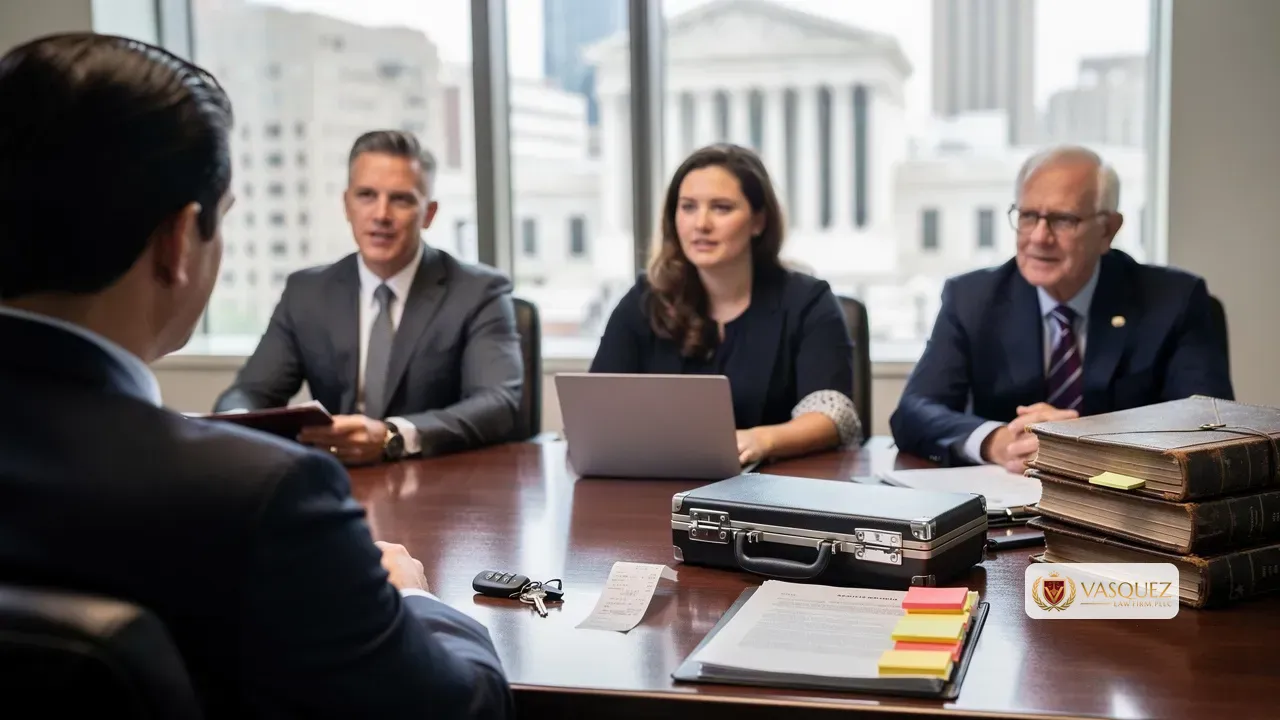
Start with the Role of a Criminal Defense Attorney
Criminal defense attorneys represent the defense side of a criminal case, while prosecutors, also called district attorneys, represent the prosecution. That distinction gives you the first useful filter: you need counsel who represents your interests rather than the government’s case. The title alone does not tell you whether an attorney handles your charge, court, or stage of proceedings, so use the role as a starting point rather than a final choice.
A criminal defense attorney may investigate a DWI case, gather supporting evidence, seek a favorable settlement, and represent you in court. Those tasks describe the work of defense counsel, but the details can differ by charge and proceeding. Ask which part of that work fits your situation.
Your first comparison should answer three questions: What allegation or citation do you face? Where is the matter in the court process? What practical consequence matters most to you right now? A useful answer might identify a DWI charge, an upcoming first appearance, and concern about driving privileges. Another might identify a drug allegation, a later proceeding, and a need for counsel familiar with the evidence involved. This approach helps you contact an attorney category that matches the problem you need to discuss.
Compare Private, Public, and Court-Appointed Representation
Private, public, and court-appointed representation differ mainly in how counsel is arranged and who provides the representation. A private attorney generally works in private practice, and a private attorney may also accept a court appointment on a contractual basis. Ask which representation path applies to your situation before comparing experience or fees.
Public defenders handle criminal cases exclusively and are typically familiar with local court systems, judges, and prosecutors. That local familiarity can matter when you are trying to understand who handles your case and what stage comes next. The selected National Association of Criminal Defense Lawyers source also describes inadequate funding as a condition that can leave many defenders with extensive caseloads, raising concerns about whether the constitutional promise discussed in Gideon is being met. Treat caseload as a question to ask, not as an assumption about the lawyer assigned to you.
A court-appointed private attorney may enter the case when a public defender’s office cannot take it because of a conflict of interest or limited staffing. The court may appoint that private attorney to represent you at the government’s expense, and the attorney typically works in private practice while accepting appointments on a contractual basis. This route is different from selecting and retaining private counsel directly. Ask who appointed the attorney, what representation covers, and who will appear at the next proceeding.
Representation type should not replace a fit check. Use these questions to make the comparison concrete:
- Who will represent you at the next hearing?
- Does the attorney or office handle the charge you face?
- Will you communicate with the attorney, another lawyer, or staff members?
- What information should you bring before the first conversation?
The answers can show whether you are comparing different service arrangements or different legal roles. Choose the path available to you, then focus on whether the assigned or retained attorney handles your charge and proceeding.

Match the Attorney to the Charge Category
Charge category gives you the next filter because criminal offenses can be misdemeanors or felonies depending on the severity of the offense and the penalties that can be imposed. Some traffic violations are misdemeanors. The label on your citation or charging document may therefore matter when you decide what experience to ask about, but the label does not predict the result of your case.
Drug offenses may involve distributing, using, or possessing illegal drugs, and they can be prosecuted at varying degrees under state and federal law. If you face a drug allegation, ask whether the attorney handles the specific conduct and level of prosecution described in your paperwork. You can also ask whether the attorney has experience with the court handling your matter. Keep the question focused on experience and process rather than asking an attorney to predict the outcome before reviewing the facts.
Assault and theft allegations can cover different conduct and different levels of prosecution. An alleged threat or act of physical violence, including domestic violence, can be prosecuted as a misdemeanor or felony depending on the surrounding circumstances. Theft can include conduct such as failing to return someone else’s property or selling goods found to have been stolen. Give the attorney the exact allegation and surrounding facts available to you, then ask whether that category is part of the attorney’s regular work.
Relevant experience is a practical screening point for any North Carolina matter. The North Carolina State Bar recommends considering an active North Carolina law license, experience and knowledge in the practice area, and a good disciplinary record. Use the charge category to make your questions specific: ask about DWI, traffic, drug, assault, theft, misdemeanor, or felony experience as applicable. That conversation can identify whether the attorney’s background fits the legal problem without turning a first contact into a case prediction.
Separate Traffic and DWI Needs from General Criminal Defense Needs
A DWI defense attorney may examine the traffic stop, field sobriety testing, breath tests, and chemical results. The way evidence was collected or recorded can affect what is used in court, so ask how the attorney reviews those parts of a case. The attorney may also scrutinize the administration of field sobriety steps and the legality of the initial police stop. Bring any citation, paperwork, or records you have so the conversation can begin with the actual allegations and evidence described in them.
DWI charges can involve license concerns, court dates, and practical effects on daily life in addition to courtroom issues. Your comparison should therefore include more than trial experience. Ask how the attorney addresses the court schedule, driving-related concerns, and the information needed to understand the next stage. Those questions do not establish what will happen in your case; they help you determine whether the attorney’s work covers the issues you need to discuss.
A DWI lawyer may handle communication with the prosecutor’s office, deadlines, hearings, and paperwork. A DWI lawyer may also negotiate with prosecutors for lesser charges or alternative sentencing options such as community service or substance abuse treatment programs. These possibilities are not promises about your case. Ask what the attorney will review, which decisions remain yours, and who will communicate with the prosecutor or appear at each hearing.
Traffic and DWI matters can overlap, but they are not interchangeable for screening purposes. A basic traffic citation may call for questions about the citation, court appearance, license status, and who will appear for you. A DWI inquiry may require questions about the stop, testing, chemical results, evidence review, and practical driving effects. Select the attorney category that matches the document you received and the issue you need addressed, then ask whether the attorney handles the full set of related concerns.

Use the Case Stage and Proceeding to Narrow the Fit
A first arraignment is an early point at which defense counsel can matter. The selected National Association of Criminal Defense Lawyers source explains that vigorous defense counsel is needed at a defendant’s first arraignment for the justice system to be fair. If your first appearance is approaching, ask whether the attorney handles early hearings and what information the attorney needs before that proceeding. Do not wait to compare counsel until you have lost track of the hearing date.
A North Carolina juvenile court decision can be appealed to the North Carolina Court of Appeals after the juvenile court judge enters the disposition. A juvenile appeal is not a new trial; the appellate court bases its decision on the written juvenile court record, written legal arguments, and sometimes oral arguments from attorneys. If your matter is an appeal, look for an attorney who handles appellate work rather than assuming that trial-level representation covers the appeal.
A North Carolina juvenile appeal has a specific notice rule described by the North Carolina Judicial Branch: notice must be given in open court at the disposition hearing or in writing within 10 days of the disposition being entered. Treat that time-sensitive requirement as a reason to seek prompt legal help when an appeal may be involved. Do not rely on a general comparison article to calculate your deadline; provide the disposition information to an attorney or the appropriate court resource promptly.
Case stage changes the questions you should ask. Use this short screen:
- Before or near the first appearance: Ask who will handle the hearing and what immediate information is needed.
- During the trial-level case: Ask how the attorney investigates evidence, communicates about hearings, and develops a defense strategy.
- After a disposition or judgment: Ask whether the attorney handles appeals and works from the existing record.
Your goal is to match the attorney’s role to the proceeding in front of you. State the next known hearing or decision date when you contact an attorney.
Check for Specialized Issues That Could Change the Choice
Commercial-driving consequences can change the questions you ask about a traffic or criminal matter. We can navigate CDL-specific issues that could affect your commercial driving career. If you hold a commercial license or depend on commercial driving for work, say so at the start of the conversation and ask whether the attorney handles the CDL issue connected to your charge. That concern does not determine the result, but it can help you identify the experience you need to discuss.
Immigration status can add a separate concern to a criminal or traffic matter. If you are a noncitizen facing a reckless-driving or DWI conviction, have the matter evaluated by both a criminal defense attorney and an immigration attorney. If you are facing criminal charges that might affect immigration status, call us or another lawyer promptly. Tell each attorney about your immigration status before making decisions, because a charge that appears primarily traffic-related may raise a separate immigration question.
Specialized concerns should appear in your first description of the matter. Include the following when they apply:
- A commercial driver’s license or a job that depends on driving.
- A DWI, reckless-driving allegation, or other traffic-related charge.
- Noncitizenship or a possible immigration consequence.
- A question about the stop, search, testing, arrest, or recorded evidence.
- A juvenile proceeding, appeal, or upcoming disposition.
Use the list to select questions, not to predict whether a defense exists. An attorney must review the facts and proceeding before giving individual guidance.
Prepare a Focused Consultation Checklist
A North Carolina lawyer’s license, relevant experience, and disciplinary record are appropriate screening questions for a North Carolina matter. The North Carolina State Bar also identifies malpractice insurance, community reputation, and compatibility of personality or temperament as factors to consider. Ask these questions directly:
- Is the lawyer actively licensed in North Carolina for this matter?
- How much of the lawyer’s work involves the charge or proceeding you face?
- Does the lawyer have experience with the court involved?
- How can you review the lawyer’s disciplinary record?
- Does the lawyer carry malpractice insurance?
- Can you communicate comfortably and clearly with the lawyer?
The answers give you concrete information for comparison without requiring you to rank attorneys by a slogan or promise.
A board-certified legal specialist may help identify proficiency in the specialty area connected to your legal need. Ask whether board certification or another relevant specialization applies to the work you need discussed. Ask about money in the same conversation: the North Carolina State Bar recommends obtaining clear information about charges for the lawyer’s services, staff services, and expenses such as copying costs and long-distance phone calls. Request an explanation of what each charge covers and who performs the work.
Traffic court representation deserves a direct question. Ask whether the attorney, another lawyer, or no lawyer will appear at each listed proceeding. Write down the answer beside the court date on your paperwork, then ask what you must do personally.
Your consultation materials should make the charge, stage, and practical concern easy to identify. Gather the citation, charging document, release or court paperwork, notices, relevant correspondence, and a short timeline of what happened. Add the name and date of the next court event if you have them. Do not alter or discard messages, records, or documents that may help explain the matter. Begin with accurate information and ask which additional records the attorney wants.

Know When Prompt Legal Help May Be Important
A speeding ticket or other charge is a reason to contact an attorney promptly to discuss the matter. We analyze the circumstances of your arrest, verify whether your constitutional rights were respected, and build a defense strategy tailored to your case. Prompt contact gives you a chance to provide the charging information, identify the next proceeding, and ask which attorney category fits the issue. It does not promise a particular defense or result.
An upcoming traffic court appearance, license concern, or DWI-related court date deserves attention before the scheduled event. DWI charges can involve license concerns and court dates as well as courtroom issues, while traffic court is strict about missed appearances. Confirm who will represent you, what you must do personally, and what documents the attorney needs. Keep the court information available when you make contact.
Criminal charges that might affect immigration status call for prompt contact with us or another lawyer. A noncitizen facing a reckless-driving or DWI conviction should have the matter evaluated by both a criminal defense attorney and an immigration attorney. State your immigration concern before discussing a decision about the criminal matter. The criminal defense and immigration questions may require separate legal analysis.
Prompt legal help is especially worth considering when any of these conditions apply:
- You have been arrested, charged, or served with a citation.
- A court date or disposition is approaching.
- Your driving privileges or commercial driving work may be affected.
- You are a noncitizen and the charge may affect immigration status.
- You are considering a juvenile appeal or have received a disposition.
Use the comparison from this guide to decide which attorney category to contact first. Bring the documents and dates you have, and identify the issue that cannot wait.
Use Your Comparison to Choose the Next Conversation
Your attorney comparison should connect the charge, case stage, proceeding, and practical consequence. A DWI or traffic matter may call for questions about the stop, testing, license concerns, court dates, and who will appear. A drug, assault, theft, misdemeanor, or felony allegation calls for charge-specific experience questions. An appeal, CDL concern, or possible immigration consequence adds another role or specialty to screen.
Your first conversation will be more focused if you have the charging document, known court date, short timeline, and main concern ready. Ask about relevant experience, North Carolina licensing, disciplinary history, communication, court representation, specialization, fees, staff charges, and expenses. Only a qualified attorney who reviews your facts can assess individual suitability or advise you about your case. Use the information you have to begin that conversation clearly.
A clear description is enough to begin: identify what you were charged with or cited for, where the matter stands, and what practical issue you need addressed. The right questions can help you distinguish charge-focused, stage-focused, and representation-focused options without predicting the outcome.
Questions to Ask Before Contacting a Criminal Defense Attorney
What are the main types of criminal defense attorneys?
The main categories include private criminal defense lawyers, public defenders, court-appointed private attorneys, and lawyers who focus on specific matters such as DWI, traffic, drug, assault, theft, trial, or appellate cases. The useful distinction is not the title alone, but whether the attorney handles your charge, proceeding, and practical concerns.
How do I choose between a public defender, a court-appointed attorney, and private counsel?
A public defender is a government-employed lawyer assigned to people who cannot afford private counsel. A court may appoint a private-practice attorney when the public defender’s office cannot take a case, such as because of a conflict or limited staffing.
What should I have ready before speaking with a criminal defense attorney?
Have your citation or charging document, release or court paperwork, notices, relevant correspondence, known hearing date, and a short timeline of events. Also identify whether the matter involves a DWI, commercial driving, immigration concerns, a juvenile proceeding, or an appeal. Accurate documents and dates help the attorney understand the charge and stage without requiring you to predict the legal outcome.
When does a criminal or traffic matter require prompt legal attention?
Contact a lawyer promptly after an arrest, charge, citation, law-enforcement contact, or notice of a court appearance. Early attention is especially important when a first appearance, juvenile appeal, driving privilege, commercial driving work, or possible immigration consequence is involved. Tell the attorney about the next known court event and any practical consequence that cannot wait.
What questions can help me evaluate a North Carolina criminal defense lawyer?
Ask whether the lawyer is actively licensed in North Carolina, handles your charge and proceeding, and has relevant experience. Clarify who will appear at each hearing, how the lawyer communicates, whether specialization or board certification applies, and how lawyer, staff, and case expenses are charged. You can also review disciplinary information and ask about malpractice insurance.