

Start with the category question, not the O-1 label
Begin with the question of which immigrant category, if any, may fit your facts and evidence. A Green Card is lawful permanent resident status. Review the O-1 history alongside the proposed category, the available evidence, and the filing questions that follow. That makes O-1 status a starting fact, not a shortcut through the immigrant-category analysis. In practical terms, keep two questions separate: what supports the current or proposed O-1 classification, and what independent requirements apply to the immigrant category under consideration. The first record may help organize the second review, but the overlap is not proof that the immigrant category fits. This guide therefore offers a framework for comparing possibilities rather than a conclusion that any O-1 holder qualifies for permanent residence.
The broad choices usually begin with two directions:
- Employment-based categories: USCIS identifies EB-1 categories for extraordinary ability, outstanding professors or researchers, and certain multinational managers or executives. - Family-based categories: USCIS lists immediate-relative and family-preference categories tied to qualifying relationships with U.S. citizens or lawful permanent residents.
These categories answer different questions. Your professional record may be central to an employment-based analysis, while a qualifying family relationship may create an independent route that should be evaluated on its own terms. Neither possibility can be assumed from your O-1 status.
Use this guide to organize the decision in four stages:
- Identify the categories that could plausibly match your work, education, family relationships, and immigration history.
- Separate the evidence you already have from evidence you would still need to locate or explain.
- Choose the broad filing route based on where you are and the requirements of the selected category.
- Pause before filing if status, work, travel, family eligibility, or prior immigration history creates an unresolved question.
The goal is not to select a category from a label. The goal is to narrow the conversation to a category, a record, and a filing plan that can be examined together.
Map the principal employment-based possibilities
Employment-based Green Card categories are not interchangeable.
For an O-1 holder, the practical comparison starts with the nature of your record rather than the fact that you hold O-1 status. Ask which description best matches the work you intend to rely on:
- Does your record center on recognition and accomplishments at a level relevant to an extraordinary-ability theory?
- Does your proposed case depend more on an advanced degree, exceptional ability, or a national interest waiver request?
- Does your employment and professional background fit a skilled-worker, professional, or other-worker category?
These questions are screening tools, not eligibility determinations. A category name can make a route sound familiar while leaving the actual evidence question unanswered.
Keep the proposed future case separate from the O-1 case that came before it. Put the two records side by side and mark where they overlap, where they use different evidence, and where the future category asks a different question. That exercise can reveal whether you are evaluating a genuine immigrant-category theory or simply assuming that a prior approval settles the next application. It does not.
Evaluate whether the record supports an extraordinary-ability theory
An extraordinary-ability EB-1 analysis should begin with the evidence categories USCIS identifies, not with a general impression that your work is impressive. USCIS lists evidence such as:
- recognized prizes or awards for excellence;
- selective memberships that require outstanding achievement;
- published material about you in professional, major trade, or other major media;
- invitations to judge the work of others;
- original scientific, scholarly, artistic, athletic, or business-related contributions of major significance;
- authorship of scholarly articles in professional, major trade, or other major media;
- displays of artistic work at exhibitions or showcases;
- leading or critical roles in distinguished organizations;
- high salary or other significantly high compensation compared with others in the field; and
- commercial success in the performing arts.
Treat each item as a question about proof. For an award, identify the issuing organization, the selection process, and what the award recognized. For published material, preserve the publication, date, author, and the way the material concerns your work. For judging, document the invitation and the work you reviewed. For a leading role, identify your responsibilities and the organization involved.
This organization does not guarantee that a category fits. It gives you a disciplined way to inspect the record before you rely on it.
To make that inspection usable, create an evidence index with one line per item. Record the item, the fact it is meant to establish, the category question it addresses, the source of the record, and the point that still needs explanation. Then label whether the item speaks directly to your role, describes the significance of the work, or merely shows that an event occurred. These are different functions. A record that shows participation may need additional context about responsibility or significance; a record that describes significance may still need proof that the description is tied to your work.
The index is not a scoring system and does not predict an outcome. It is a way to expose gaps before the documents are assembled into a filing theory.
Do not count documents without asking what they establish. A résumé may show that an activity occurred, while a letter or independent record may explain its significance. A publication may mention your work without showing the kind of recognition you need to prove. A compensation record may show an amount without supplying a meaningful comparison.
Your working question should be: What does this document prove, and how does that proof relate to the category? If the answer is unclear, mark the item for case-specific review instead of treating it as a finished part of the theory.
Keep other employment-based routes in the comparison
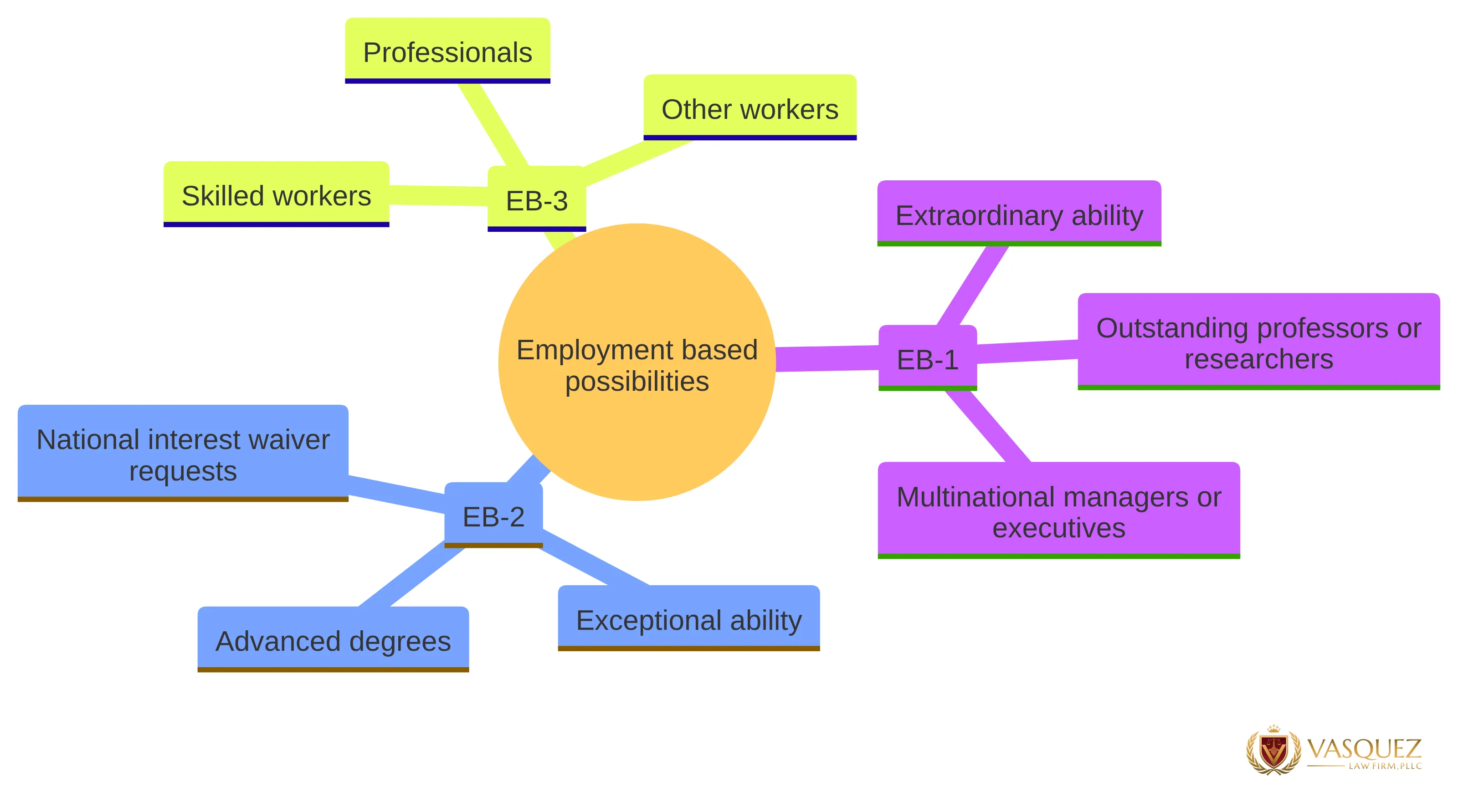
An EB-1 extraordinary-ability theory is only one employment-based possibility. USCIS describes EB-2 as covering certain professionals with advanced degrees and people with exceptional ability, including national interest waiver requests. USCIS describes EB-3 as covering skilled workers, professionals, and other workers.
Use the following comparison to decide what information deserves attention first:
| Category | USCIS description | First evidence question |
|---|---|---|
| EB-1 | Extraordinary ability, outstanding professors or researchers, and certain multinational managers or executives | Does your record contain the kind of recognition and field-related evidence associated with the proposed EB-1 theory? |
| EB-2 | Certain professionals with advanced degrees or people with exceptional ability, including national interest waiver requests | Which part of the EB-2 description would your proposed case rely on, and what records support that part? |
| EB-3 | Skilled workers, professionals, or other workers | Which EB-3 description matches the proposed position and your qualifications? |
The table is a starting map, not a finding that you qualify for any category.
Ask what role the employer, position, education, experience, and proposed work would play in the route under discussion. If the plan depends on an employer action, a labor-related step, a petition, or a filing sequence, identify that dependency before you choose a strategy. Do not assume that the route with the most familiar name has the simplest procedure.
A useful comparison sheet has one row for each possible category and four columns: the category theory, the evidence already available, the missing or disputed proof, and the procedural questions that remain. Bring that sheet to your consultation. Add a fifth column called “decision dependency.” In it, write the unresolved fact that could change the comparison, such as whether the proposed theory depends on a particular position, a qualifying relationship, a petition step, or a filing condition. This keeps the table from treating every missing document as equally important. A missing document may be a way to explain an established fact, or it may conceal an unanswered category question. Those situations call for different follow-up questions.
Review the rows by the importance of the unresolved question, not by the size of the document folder. The purpose is not to rank your chances. It is to show which issue should be clarified first and which alternatives should remain open while that issue is reviewed.
Check family-based eligibility independently
Family-based eligibility deserves its own analysis even when your main concern is employment. USCIS identifies immediate-relative categories for the spouse of a U.S. citizen, an unmarried child under 21 of a U.S. citizen, and a parent of a U.S. citizen who is at least 21. USCIS also identifies family-preference categories that include certain adult or married children and siblings of U.S. citizens, as well as spouses and unmarried children of lawful permanent residents.
For certain relatives of U.S. citizens, USCIS lists Form I-130, Form I-485, and Form I-864 among the related forms for the Green Card process. The forms that apply depend on the case, so treat this list as a prompt for questions rather than a filing package.
If you are considering a family-based path, gather the records that show the relationship and the legal eligibility connected to it. Start with the relationship itself, then identify the documents that explain your immigration history and the family member's status. Keep this review separate from your employment evidence; a strong professional record does not answer a family relationship question, and a qualifying relationship does not answer an employment-category question.
Write down every possible qualifying relationship, including the relationship, the family member's immigration status, and any fact that could affect the category. Do not select a family route merely because it sounds faster or easier. Compare the legal basis, documents, filing location, and effect on your existing plans before you decide which path to investigate.
Use evidence readiness to narrow the options
Evidence readiness is a practical way to narrow your options without confusing paperwork volume with eligibility. For each possible category, sort your information into four groups:
- Available: records you can locate now and explain clearly.
- Needs context: records that exist but require translation, comparison, background, or an explanation of your role.
- Needs confirmation: facts that depend on another person, organization, employer, or government record.
- Unresolved: facts that could change the category, filing route, or timing of the plan.
This sorting exercise tells you where a consultation can add value. It also prevents you from presenting a long document pile without showing how the documents connect to the category.
For an employment-based theory, organize evidence around the category description and the specific accomplishment, qualification, role, or work you intend to rely on. For a family-based theory, include evidence of the relationship and legal eligibility. For either route, keep the original record, a plain-language explanation, and the question raised by that record together.
Also identify whether you would be applying as the principal applicant or, in some cases, as the spouse or child derivative of a principal applicant. Form I-485 instructions recognize both possibilities, but the applicable requirements can vary by immigrant category.
Use this short test for every proposed document:
- What fact does it establish?
- Which category question does that fact answer?
- Is the document complete, readable, and consistent with the rest of the record?
- What remains uncertain after reviewing it?
If you cannot answer the second question, the document may still matter, but you should not treat it as proof of a particular pathway.
Separate category selection from the filing location
The immigrant category and the filing location are separate decisions. After you identify a possible category, ask whether the process would take place inside the United States through adjustment of status or outside the United States through consular processing.
| Filing route | Location and general process | Question to resolve before planning |
|---|---|---|
| Adjustment of status | If you are in the United States, you may pursue adjustment of status through USCIS, subject to the requirements of your immigrant category. Form I-485 is used to seek lawful permanent resident status, and you must be physically present in the United States to file it. | Are you in the United States, and do the selected category's adjustment requirements apply to your facts? |
| Consular processing | If you are outside the United States, consular processing through the U.S. Department of State may be the applicable Green Card process. | Will the case proceed outside the United States, and what category and procedure govern that process? |
USCIS explains that when an immigrant petition is approved and an immigrant visa is available, you may be able to file Form I-485. In some categories, the petition and Form I-485 may be filed together through concurrent filing. Those conditions make the filing sequence a category-specific question, not a choice you can make from your O-1 label alone.
Do not treat adjustment of status and consular processing as interchangeable administrative locations. Your physical location, category, petition posture, visa availability, and immigration history may affect which route can be considered. Record where you are now, where you expect to be when filing, and which facts could change that plan. Use a route worksheet with two separate headings: “category and petition questions” and “location and process questions.” Under the first, record the proposed immigrant category, whether a petition is involved, and the visa-availability question. Under the second, record your physical location, the agency or process being considered, and any expected move or travel that could change the facts. Keeping these headings separate helps prevent a change in location from being mistaken for a change in category, or a category question from being answered merely by choosing a form. Revisit the worksheet whenever a core fact changes, rather than carrying an old route assumption into a new filing discussion.
Understand the adjustment-of-status decision points
Form I-485 is the application used by someone in the United States to seek lawful permanent resident status, commonly called a Green Card. The instructions dated September 18, 2026, state that you must be physically present in the United States to file and that additional adjustment-of-status requirements vary by immigrant category.
Before treating adjustment of status as your plan, work through these decision points:
- Category: What immigrant category are you pursuing, and what evidence supports it?
- Petition posture: Is an immigrant petition required, already approved, or potentially filed with the adjustment application?
- Visa availability: Is an immigrant visa available for the category when filing is considered?
- Physical presence: Will you be physically present in the United States when you file Form I-485?
- Applicant role: Are you applying as the principal applicant, or could you be a spouse or child derivative in a qualifying case?
- Instructions: What does the applicable Form I-485 guidance require for your category and circumstances?
USCIS indicates that some categories may permit the petition and Form I-485 to be filed together, while other plans require a different sequence. Treat each point as a question to resolve, not as a prediction of eligibility.
Write, “If category X applies and condition Y is satisfied, then ask whether filing step Z is available.” That wording keeps your plan tied to facts that still need review. It also helps you notice when a change in category, location, or petition status would require a different filing plan.
Do not prepare Form I-485 as though the form itself resolves the category question. First identify the immigrant basis. Then examine the filing conditions. Only after those questions are addressed should you decide whether an adjustment filing belongs in the plan.
Plan around procedure without promising a timeline
Procedure should be planned as a series of conditions rather than as a promised timetable. The broad sequence may involve identifying the immigrant category, preparing or filing the relevant immigrant petition when required, determining whether an immigrant visa is available, selecting adjustment of status or consular processing, and completing the application route that applies to your location. USCIS also recognizes that some categories may allow concurrent filing of the petition and Form I-485.
Build your planning notes around decisions, not calendar promises:
- What category is the proposed basis?
- Does that category require an immigrant petition?
- Is the petition already filed, approved, or still under consideration?
- Is an immigrant visa available for the filing decision you are considering?
- Will you be in the United States or outside the United States at the relevant stage?
- Which agency and filing route would handle that stage?
- What event would make you pause and obtain case-specific advice?
This list helps you separate a legal requirement from a personal target date.
To make this list operational, divide your notes into three columns: established, conditional, and unresolved. Record a fact as established only when your documents support it. Place concurrent filing under conditional because some categories may permit it; do not treat that possibility as applying to every category. Place work, travel, and status effects under unresolved unless they have been reviewed for your facts. For each unresolved item, identify the document or question that could clarify it.
This prevents a possible filing sequence from becoming an assumed next step. It also shows what kind of review is needed first. If the category itself is uncertain, focus on the category description and evidence. If the category is identified but a petition or visa-availability condition is unclear, focus on that dependency. If those issues are addressed but location or current-status questions remain, keep the route comparison open rather than treating a form as the answer. This is a triage method for organizing questions, not a method for ranking approval prospects.
When two routes remain under consideration, compare them using the same headings: category basis, principal or derivative role, evidence, petition dependency, filing location, and status or travel questions. A blank under one heading means information is incomplete; it is not proof that the route fails. A full document folder is likewise not proof that the category fits. The useful output is a short list of dependencies and questions for review, not a confidence score or promised result.
Avoid building a personal plan around an assumed approval date, an assumed filing window, or an assumption that one application will automatically replace another status. Use dates to organize documents and questions, but leave the legal sequence open until the category, location, and filing conditions have been examined together.
Protect current status, work, and travel decisions
Your current status, work plans, and travel plans should be treated as separate questions from the choice of immigrant category. Form I-485 instructions state that you must be physically present in the United States to file, but that filing condition does not answer every question about travel before or after filing.
Do not assume that an O-1 approval, a pending immigrant petition, or a planned adjustment filing automatically tells you:
- whether you may keep working under every proposed job or work arrangement;
- whether a change in employment, duties, employer, or location affects your plan;
- whether leaving the United States changes the filing strategy;
- whether travel is advisable while an application is pending; or
- whether a filing changes the status you currently hold in the way you expect.
Those are case-specific questions. The answer can depend on facts such as your current documentation, the proposed category, the filing stage, and your immigration history.
Create a separate status-and-travel page in your consultation notes. Record your current status, expiration dates shown on your documents, pending filings, planned employment changes, upcoming travel, and any prior status issue or notice. Then identify which decision must be made before you file and which can wait.
Do not make a work or travel decision solely because a general guide describes a possible Green Card pathway. Keep the decision tied to your own documents and the advice you receive for the proposed filing.
A general pathway comparison can help you ask better questions. It cannot authorize work, preserve status, or clear a travel plan. Treat any unresolved issue in these areas as a reason to pause the decision and obtain case-specific guidance.
Prepare a focused consultation packet
A focused consultation packet should make your proposed pathway, evidence, and unresolved risks easy to understand. Arrange the materials in sections rather than sending an unindexed collection of files:
- Identity and immigration history: copies of relevant passports, visas, status documents, prior filings, approvals, notices, and records that explain your time in the United States.
- O-1 record: the petition materials and supporting evidence that show the basis of your current or proposed O-1 status.
- Employment-based evidence: résumé, position information, education and experience records, awards, publications, judging invitations, memberships, compensation records, and evidence of roles or contributions that relate to the proposed category.
- Family-based evidence: records showing any qualifying relationship and the relevant family member's immigration status.
- Decision sheet: the categories you are considering, the documents supporting each, the gaps, and the questions that could change the plan.
Match the packet to the theory you want reviewed. If you are considering an extraordinary-ability category, arrange records around the evidence types USCIS lists, such as awards, selective memberships, published coverage, judging, original contributions, authorship, leading roles, compensation, or commercial success in the performing arts. If you are considering a family-based path, include evidence of the relationship and legal eligibility.
Bring questions about your role in the process as well. Ask whether you would apply as the principal applicant or a derivative applicant, which forms may relate to the proposed family-based route, and whether Form I-485 is part of the plan. USCIS instructions identify principal and derivative applicants, and USCIS lists Form I-130, Form I-485, and Form I-864 among related forms for certain family-based cases.
Use this question list during the consultation:
- Which immigrant categories should be evaluated first, and why?
- What evidence supports each category, and what evidence is missing or weak?
- Does the proposed route depend on an employer, family relationship, petition, or another step?
- Would the case use adjustment of status or consular processing?
- What filing conditions must exist before the next step?
- What should you avoid changing about work, travel, or status while the plan is reviewed?
- Which documents or dates could change the recommendation?
A concise packet makes it easier to discuss the actual decision instead of spending the meeting reconstructing your history. Add a one-page chronology to the packet. List the dates and short descriptions of status documents, petitions, approvals, notices, employment changes, travel, and planned next steps, and flag any date you cannot verify. Do not use the chronology to decide whether an event has a legal consequence; use it to identify the questions that require review. Place each event next to the document that supports it, and note when a document is missing, inconsistent, or difficult to interpret.
This format helps distinguish a missing record from a missing explanation. It also gives the consultation a clear starting point: the reviewer can see what happened, what you believe is pending, and which assumptions you want tested. Keep the chronology factual and avoid labeling an event as lawful, unlawful, approved, or disqualifying unless that conclusion has been reviewed for your circumstances.
Choose the next step after comparing fit and risk
The O-1 to Green Card decision comes down to four linked questions: which immigrant category fits the facts, whether your evidence supports that category, where the process would take place, and how the plan interacts with your current status, work, and travel decisions. An employment-based route may focus on EB-1, EB-2, or EB-3 descriptions; a family-based route should be tested independently. Neither route should be selected from the O-1 label alone.
Before filing or changing your immigration plans, have a qualified immigration lawyer decide how the category, evidence, filing location, and personal circumstances apply to you. If you want help with an adjustment-of-status application, call a lawyer.
Bring the category comparison, evidence map, immigration history, status-and-travel questions, and consultation packet you prepared. That gives you a concrete basis for deciding whether to pursue a particular pathway or investigate another option first.
What should an O-1 holder ask before choosing a Green Card pathway?
What is Form I-485 and who can file it?
Form I-485 is the application used by individuals in the U.S. to apply for lawful permanent resident status, commonly known as a Green Card. To file this form, the applicant must be physically present in the U.S. and meet the eligibility requirements for their immigrant category.
What should I prepare before consulting an immigration lawyer about transitioning from an O-1 visa to a Green Card?
Before consulting an immigration lawyer, gather documents related to your identity, immigration history, O-1 status, employment records, and any family relationships that may support a Green Card application. Prepare a list of questions regarding your eligibility and the specific pathways you are considering.
What are the immediate-relative categories for family-based Green Cards?
Immediate-relative categories for family-based Green Cards include the spouse of a U.S. citizen, an unmarried child under 21 of a U.S. citizen, and a parent of a U.S. citizen who is at least 21 years old.
Sources
- How to Apply for a Green Card | USCIS — www.uscis.gov
- Form I-485, Instructions for Application to Register ... — www.uscis.gov
- Green Card Eligibility Categories | USCIS — www.uscis.gov
- Family of U.S. Citizens | USCIS — www.uscis.gov
- Green Card for Employment-Based Immigrants | USCIS — www.uscis.gov
- Employment-Based Immigration: First Preference EB-1 | USCIS — www.uscis.gov
- Green Card Rules in 2026: What You Must Know Now | Vasquez Law Firm